

A bridge loan for buying a house is a short-term financing tool that allows homeowners to use their current property's equity to purchase a new residence before their existing one is sold. This temporary loan provides immediate cash for a down payment, enabling buyers to make non-contingent offers and avoid the need to move twice. These loans usually carry higher interest rates and last for six to twelve months; they are typically repaid in full once the original home sale closes.
In today's competitive real estate landscape, many homeowners find themselves trapped in a difficult financial paradox. You have identified your next primary residence; however, your liquid capital remains locked within the equity of your current home. This lack of immediate liquidity often forces you to submit contingent offers, which are frequently rejected in favor of more decisive buyers. At Pac Prime Mortgage, we recognize that timing is often the greatest barrier to securing a premium property. A bridge loan serves as a strategic, short term financing solution designed to close this specific gap. In this guide, we will examine how these loans facilitate five day closings and no appraisal contingencies. We will also weigh the associated interest costs against the opportunity cost of losing your ideal home, ensuring you understand exactly when this tool serves your financial interests and when alternative financing is more appropriate.
What is a Bridge Loan for Buying a House and How Does It Work?
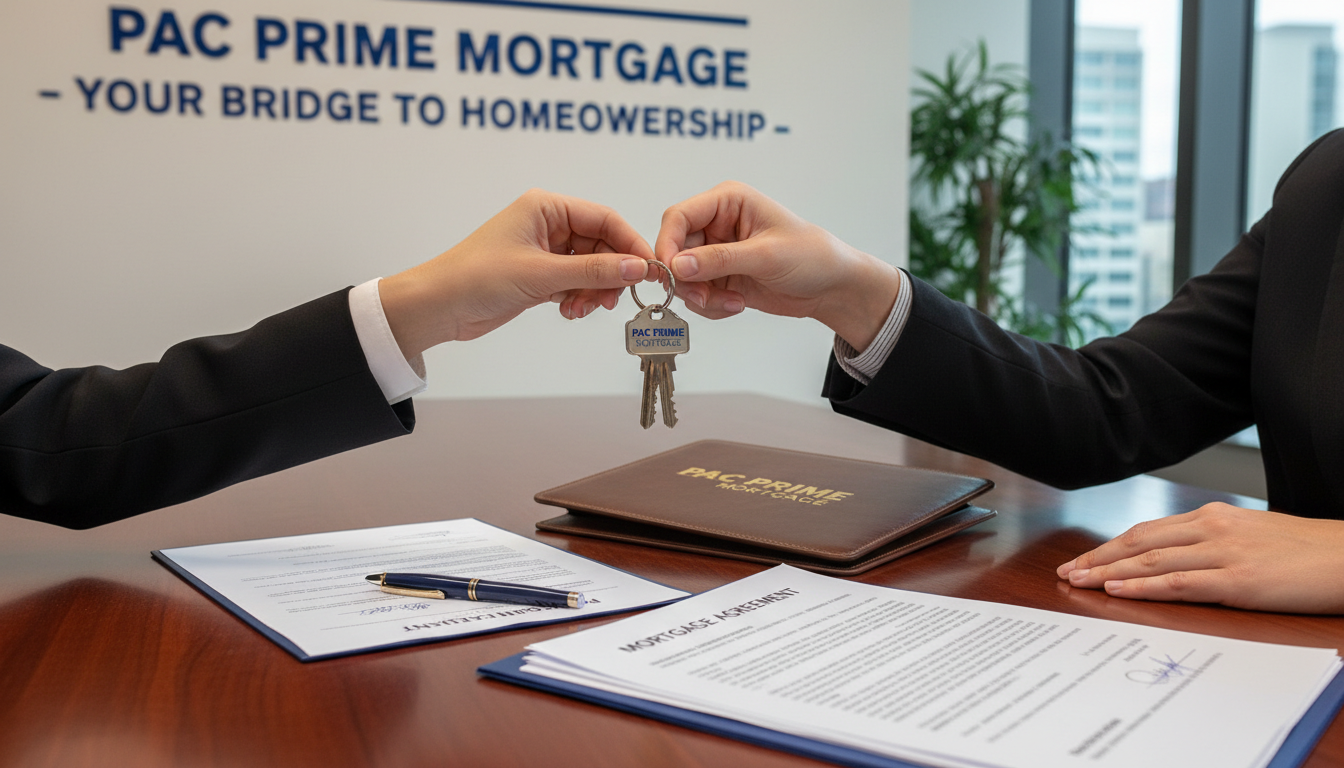
Understanding what is a bridge loan for buying a house begins with its primary purpose: providing immediate liquidity by leveraging an existing asset. In its simplest form, a bridge loan is a short-term financing tool designed to bridge the gap between the purchase of a new property and the eventual sale of your current residence. Instead of waiting for a buyer to close on your old home to access your funds, this loan allows you to tap into your current equity to secure a down payment or even cover the full purchase price of a new property immediately.
The mechanics involve calculating the usable equity in your residence, which is determined by taking the current market value and subtracting any existing debt, then using that collateral to secure the new funding. Unlike traditional 30-year mortgages, which are structured for long-term residency and require extensive documentation, residential and commercial bridge loans are designed for speed and agility. These loans typically carry shorter terms, ranging from 6 to 12 months, and are meant to be repaid in full once the original home sells.
Speed is the defining characteristic of this financing model. While traditional retail banks often require 45 days or longer to process a mortgage, specialized direct lenders in the Bay Area operate on a compressed timeline. At Pac Prime Mortgage, we facilitate expedited five-day closings by bypassing the bureaucratic delays common in conventional lending. This rapid execution is essential in competitive markets like Burlingame, where the ability to move quickly often dictates the success of a real estate transaction.
When a Bridge Loan Makes Perfect Sense for Homeowners
For homeowners in high-demand markets like Burlingame and the broader San Francisco Bay Area, the utility of this financing tool becomes clear during a competitive bidding process. The most significant advantage is the ability to execute a buy before you sell strategy. In local real estate cycles where multiple offers are the norm, a contract containing a sale contingency is often disregarded by sellers. Utilizing a buy before you sell bridge loan allows you to submit a non-contingent offer, providing the seller with the same closing certainty as a cash buyer. This tactical move is frequently the only way to secure a property in neighborhoods where inventory is scarce and speed is a requirement.
Beyond the competitive edge, a bridge loan solves the logistical nightmare known as the double move. Traditional transitions often require homeowners to sell their current residence, move into a temporary rental or stay with family, and then move a second time once the new home is secured. By leveraging existing equity, you can purchase the new property first, move once, and then prepare your previous home for sale at your own pace. This is particularly beneficial for those who need to perform minor renovations or staging to maximize the sale price of their original residence.
Financial breathing room is another critical factor. While some worry about the complexity of managing two properties, specialized structures like those offered by Pac Prime Mortgage include flexible terms with no payments for twelve months. This removes the immediate cash flow stress associated with carrying two mortgages simultaneously. Homeowners can focus their liquidity on the new purchase while the original property sits on the market. With expedited five-day closings, this transition happens quickly, ensuring you do not lose out on a specific opportunity while waiting for traditional bank bureaucracy to clear.
The Competitive Advantage of No-Appraisal and Five-Day Closings

The primary barrier to speed in traditional lending is the valuation process. Most institutions require a full interior appraisal or a Broker Price Opinion (BPO), a process that can easily consume two to three weeks of a thirty-day escrow. In a market where inventory moves in days, not months, this delay is often a deal-breaker. By offering a no-appraisal or BPO option, Pac Prime Mortgage removes this bureaucratic bottleneck, facilitating expedited five-day closings that provide the same level of certainty as an all-cash offer.
Our position as a direct lender with deep Burlingame expertise allows us to evaluate collateral internally rather than relying on backlogged third-party vendors. When considering what is a bridge loan for buying a house, speed should be viewed as its most valuable feature. While traditional banks are still processing paperwork, our residential and commercial bridge loans are already funded. This agility is crucial for winning bids in the San Francisco Bay Area, where sellers prioritize buyers who can guarantee a swift and seamless transition. By bypassing the appraisal requirement, we empower clients to meet aggressive timelines that retail banks simply cannot match.
When a Bridge Loan Does Not Make Sense

While residential and commercial bridge loans offer unparalleled agility, they are precision instruments rather than universal remedies. The primary constraint involves equity. Because these loans are secured by the value of your existing residence, homeowners with low equity, typically less than 20 to 30 percent, may find the loan to value (LTV) ratios restrictive. In these instances, the available capital may not sufficiently cover the down payment for a new property and the associated transaction costs, making the math unfavorable.
Market conditions also dictate the viability of this strategy. While our expedited five-day closings solve for speed, they cannot fix a cold real estate market. If your current property is located in an area where average days on market exceed twelve months, or if the property requires extensive repairs that might delay a sale, the short-term nature of a bridge loan poses a risk. These loans are designed to be temporary. Without a high probability of a sale within the six to twelve month term, you may face the stress of an approaching maturity date without a clear path to repayment.
A bridge loan is also suboptimal for those without a defined exit strategy. The exit is the mechanism by which the loan is retired, usually the sale of the primary residence or a long-term refinance. If you are uncertain about your ability to qualify for a traditional mortgage on the backend or if your sale price expectations are unrealistic for the current market, this financing can become an expensive way to delay an inevitable problem. Expertly assessing what is a bridge loan for buying a house requires recognizing that its value lies in its speed, not in its ability to carry debt indefinitely.
Evaluating the Costs: Interest Rates vs. Opportunity Costs
The cost of residential and commercial bridge loans is frequently cited as a primary drawback, yet a purely numeric comparison to 30-year mortgage rates is often misleading. Interest rates for bridge financing typically range between 9 percent and 11 percent, with origination fees generally falling between 1.25 and 1.95 points. While these figures exceed conventional financing, the total interest paid is limited by the loan's short duration, often lasting only 90 to 180 days until the original home sells.
When determining if this path is viable, you must weigh the interest expense against the significant opportunity costs of traditional selling. Moving twice, renting temporary housing, and paying for climate controlled storage can easily cost a homeowner between $10,000 and $20,000, often exceeding the cost of the bridge loan itself. Furthermore, in the San Francisco Bay Area, the cost of losing a dream home because of a sale contingency is a permanent loss of future appreciation that far outweighs short-term financing fees.
For specific strategic scenarios, business-purpose funding can be applied even to owner-occupied residences, providing capital for investment or business operations while leveraging home equity. By utilizing a buy before you sell bridge loan with no payments for twelve months, you protect your monthly cash flow, transforming the interest rate from a burden into a strategic investment in transaction certainty and logistical ease.
Bridge Loan Alternatives: HELOCs vs. Cash Offers
Understanding what is a bridge loan for buying a house requires evaluating common alternatives like Home Equity Lines of Credit (HELOCs). While a HELOC might offer a lower initial interest rate, it often proves unreliable for a transition. Most traditional banks require the borrower to maintain the home as their primary residence, and many will freeze the credit line the moment a property is listed for sale. This effectively cuts off your liquidity precisely when you need it to fund a down payment on a new residence.
Timing is the other significant hurdle. A HELOC or a 401k loan can take 30 to 60 days to process, a timeframe that is incompatible with the San Francisco Bay Area’s fast moving market. 401k loans are further limited by federal caps, usually maxing out at $50,000, which is rarely sufficient for a down payment in Burlingame. In contrast, expedited five-day closings through a direct lender provide capital in a fraction of the time.
By leveraging a residential and commercial bridge loan, you enter the market as a cash buyer. Because our process allows for no-appraisal options, your offer is not subject to the typical financing contingencies that cause sellers to hesitate. This buy before you sell bridge loan approach provides a level of speed and certainty that alternative credit products simply cannot replicate.
Common Questions About Bridge Financing
Determining what is a bridge loan for buying a house often requires addressing the exit strategy. When your original property sells, the loan is retired immediately at closing; the escrow officer receives a payoff demand and utilizes the sale proceeds to satisfy the debt. This seamless transition ensures you are not managing multiple long-term liabilities.
Regarding costs, a $100,000 bridging loan typically involves origination fees between 1.25 and 1.95 points, amounting to $1,250 to $1,950. With interest rates generally between 9 percent and 11 percent, the monthly interest on a $100,000 balance ranges from approximately $750 to $917. While financial personalities like Dave Ramsey often warn against the risk of carrying two mortgages, the buy before you sell bridge loan model at Pac Prime Mortgage utilizes a safety net of no payments for twelve months. This structure eliminates immediate financial strain, allowing you to leverage residential and commercial bridge loans without monthly cash flow pressure. Coupled with expedited five-day closings, this approach provides a controlled, expert-led path to securing your next property.